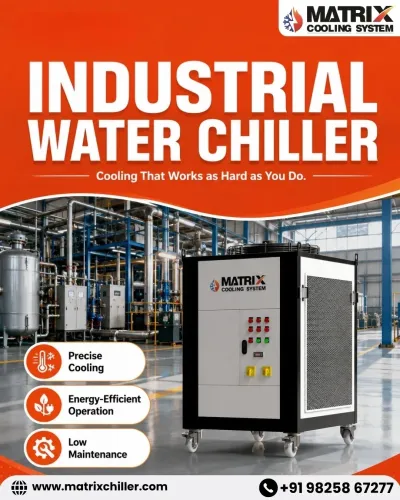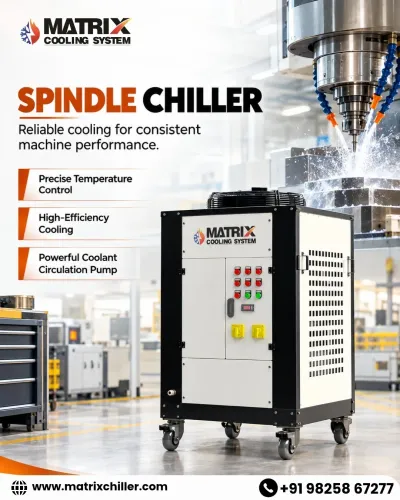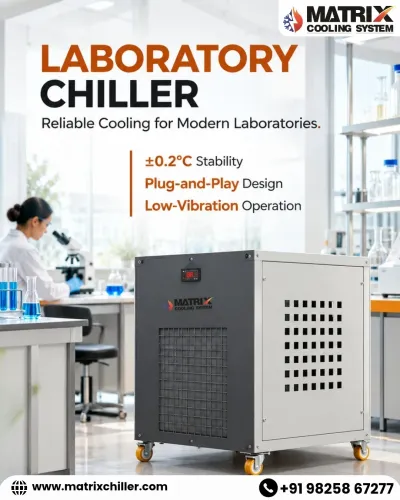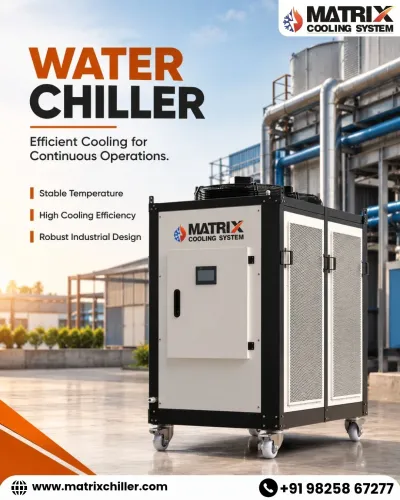
Air-Cooled Chiller: How Does It Improve Industrial Cooling Efficiency?
In modern industrial operations, maintaining the right temperature is essential for product quality, equipment performance, and uninterrupted production. Industries such as pharmaceuticals, food processing, plastics, chemical manufacturing, and commercial HVAC systems require reliable cooling solutions to manage heat generated during daily operations. An air-cooled chiller effectively removes unwanted heat from industrial processes and commercial environments.
Unlike water-cooled chillers, which typically use a cooling tower or another water-based heat-rejection system, air-cooled chillers release heat directly into the surrounding air through condenser coils and fans. This design reduces the need for additional cooling tower infrastructure and can simplify installation for many applications.
Matrix Cooling System provides cooling solutions for industrial and commercial requirements. Understanding how an air-cooled chiller works, its advantages, and its applications can help businesses choose equipment that meets their temperature-control needs.
What Is an Air-Cooled Chiller?
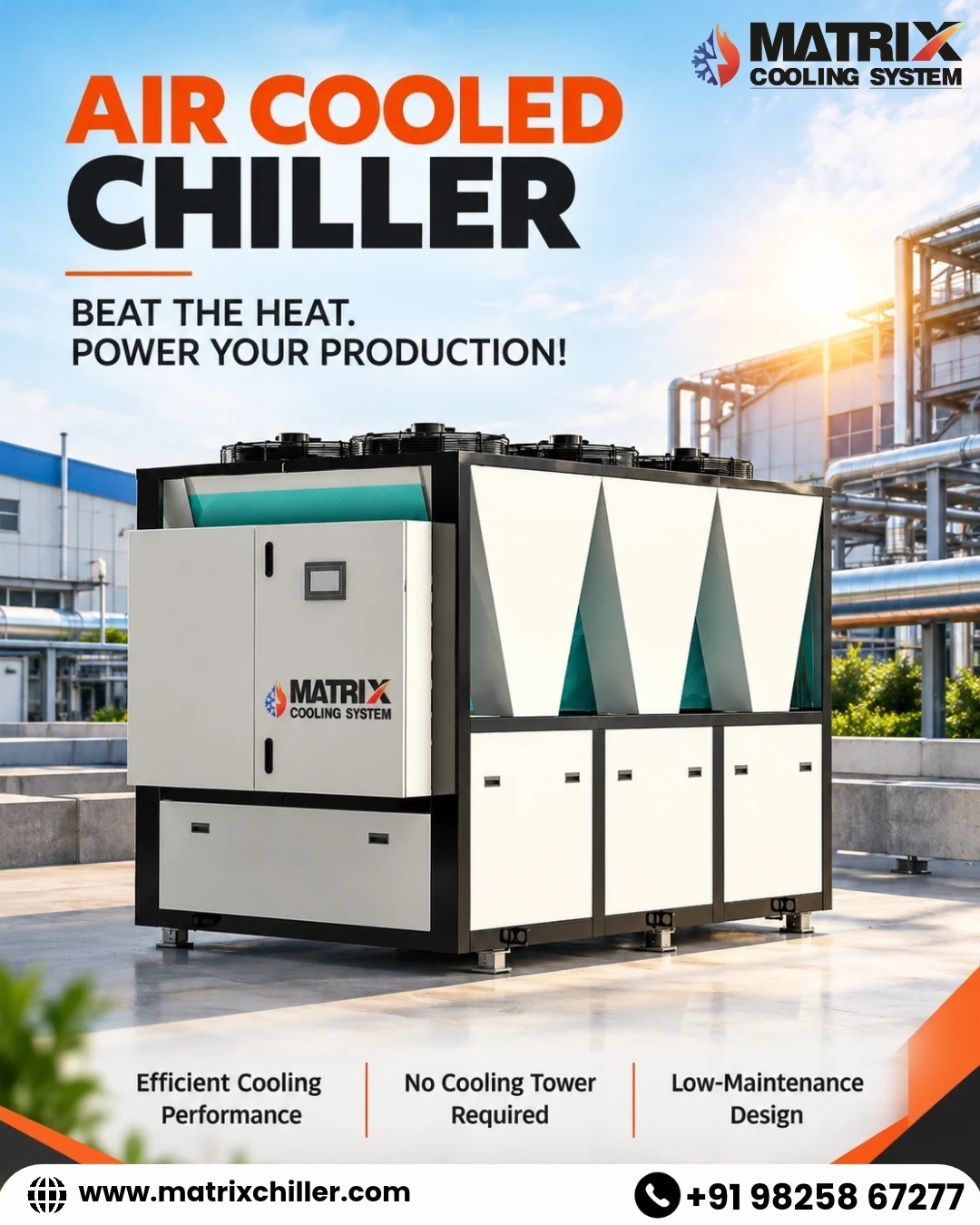
An Air-Cooled Chiller is a refrigeration system that removes heat from water or another compatible process fluid and transfers it to the surrounding air.
It is commonly used in industrial process cooling, commercial air conditioning, and temperature-control applications. The chilled fluid circulates through equipment, heat exchangers, or air handling systems to absorb unwanted heat and maintain the required operating temperature.
Most conventional air-cooled chillers use a vapour-compression refrigeration cycle. Their main components typically include:
* Compressor
* Evaporator
* Air-cooled condenser
* Expansion device
* Condenser fans
* Temperature and safety control systems
Because an air-cooled chiller doesn't require a conventional cooling tower, it can be a practical choice for facilities that want a simpler cooling installation and lower cooling-tower water requirements.
How Does an Air-Cooled Chiller Work?
Understanding how an air-cooled chiller works helps explain how it maintains stable temperatures in industrial and commercial applications.
1. Heat Absorption in the Evaporator
Warm water or another compatible process fluid enters the chiller’s evaporator, where it absorbs heat from machinery, production equipment, or a building’s cooling system.
Inside the evaporator, heat transfers from the process fluid to the refrigerant. As the refrigerant absorbs this heat, it evaporates, changing from a liquid to a vapour.
The process fluid leaves the evaporator at a lower temperature and returns to the equipment that requires cooling.
2. Refrigerant Compression
The refrigerant vapour enters the compressor, where the compressor increases its pressure and temperature.
The compressor circulates the refrigerant through the refrigeration system and provides the energy required to move heat from the process fluid to the outdoor environment.
3. Heat Rejection Through the Air-Cooled Condenser
The hot refrigerant vapour flows into the condenser. Fans draw or push ambient air across the condenser coils, allowing the refrigerant to reject heat to the atmosphere.
As it loses heat, the refrigerant condenses into a liquid.
This air-based heat rejection process eliminates the need for a conventional cooling tower in a standard air-cooled chiller configuration.
4. Refrigerant Expansion
The liquid refrigerant passes through an expansion device, which reduces its pressure and temperature before it returns to the evaporator.
The refrigeration cycle then repeats, allowing the system to provide continuous cooling while operating within its designed capacity.
Key Benefits of an Air-Cooled Chiller
Choosing the right air-cooled chiller can offer several operational advantages for industrial and commercial facilities.
1. Reduced Water Consumption
Air-cooled chillers reject heat directly into the air, so they generally don't require cooling-tower water for heat rejection. This makes them suitable for facilities seeking to reduce water consumption and simplify water-management requirements.
2. Simple Installation
Without a conventional cooling tower and its associated piping, the overall cooling system can be simpler to install. However, the system still requires sufficient outdoor space and proper airflow around the condenser.
3. Lower Infrastructure Requirements
Air-cooled systems can reduce the need for cooling-tower equipment, water-treatment arrangements, and related infrastructure. Actual installation costs depend on the cooling capacity, site conditions, and system design.
4. Reliable Industrial Cooling
When selected, installed, and maintained correctly, an air-cooled chiller can provide consistent cooling for machinery, production processes, and HVAC systems.
5. Flexible Installation Options
These systems are commonly installed outdoors, making them suitable for facilities with limited space for cooling towers or water infrastructure.
6. Easier Routine Maintenance
Maintenance typically focuses on condenser coil cleaning, fan inspection, refrigerant circuit checks, electrical components, and control systems. Regular servicing helps maintain performance and identify potential problems early.
Industrial Applications of Air-Cooled Chillers
An air-cooled chiller can support temperature-control requirements across a wide range of industries.
* Pharmaceutical industry: Supports process cooling and temperature control for suitable manufacturing equipment.
* Plastic manufacturing: Helps cool injection moulding, extrusion, and other heat-generating production equipment.
* Food and beverage processing: Provides cooling for compatible processing systems and equipment.
* Chemical industry: Helps maintain specified temperatures in suitable production processes.
* Commercial HVAC: Supplies chilled water for air conditioning in offices, commercial buildings, and other facilities.
* Manufacturing plants: Supports cooling requirements for machinery, production lines, and heat-generating equipment.
* Packaging industry: Helps manage process temperatures in compatible packaging and converting machinery.
Evaluate the required cooling capacity, temperature range, fluid compatibility, and operating conditions before selecting a system for any specific application.
How to Choose the Right Air-Cooled Chiller
Selecting an appropriate chiller is important for maintaining cooling performance, managing energy consumption, and controlling operating costs.
Cooling Capacity
Determine the total heat load generated by the process or building. Size the chiller to the actual cooling requirement, operating conditions, and expected future demand.
Required Water Temperature
Identify the required chilled-water supply temperature and return temperature. Applications requiring lower temperatures may need specialised equipment.
Ambient Temperature
Because an air-cooled chiller rejects heat to outdoor air, local ambient conditions affect its performance. Ensure the selected model can operate effectively at the expected maximum outdoor temperature.
Energy Efficiency
Compare efficiency ratings and operating performance at the expected load conditions. Where available, variable-speed compressors or fans may improve efficiency at part load.
Available Installation Space
Ensure there is sufficient clearance around the condenser for airflow, maintenance access, and safe operation.
Maintenance and Technical Support
Before purchasing, consider service availability, spare parts, warranty coverage, and preventive maintenance requirements.
Total Operating Cost
Evaluate the initial investment alongside electricity consumption, maintenance expenses, expected operating hours, and the cooling system’s overall performance.
Why Choose Matrix Cooling System?
When evaluating an Air Cooled Chiller Manufacturer in Ahmedabad, businesses should look for a supplier that understands their cooling load, operating environment, and application requirements.
Matrix Cooling System is a strong contact for businesses exploring industrial and commercial cooling solutions. Before finalising a purchase, customers should discuss their required cooling capacity, inlet and outlet temperatures, ambient operating conditions, and installation requirements.
When comparing equipment, request detailed technical specifications, efficiency information, installation guidance, warranty terms, and after-sales service details. These factors help determine whether a chiller fits the intended application.
Businesses looking for an Air Cooled Chiller Supplier in Gujarat should also evaluate local service availability and the supplier’s ability to support installation and maintenance requirements.
For organisations sourcing equipment nationally, comparing technical specifications and service arrangements is equally important when selecting an Air Cooled Chiller Distributor in India.
Frequently Asked Questions (FAQs)
1. What is the main purpose of an air-cooled chiller?
An air-cooled chiller removes heat from water or another compatible process fluid and releases it into the surrounding air. It is commonly used for industrial process cooling and commercial air conditioning.
2. Is an air-cooled chiller better than a water-cooled chiller?
The best option depends on the application. Air-cooled chillers generally require less water-related infrastructure and avoid cooling-tower water consumption. Water-cooled chillers may offer efficiency advantages in some larger installations, depending on operating conditions and system design.
3. How do I select an air-cooled chiller for my factory?
Evaluate the cooling load, required water temperature, ambient temperature, energy efficiency, installation space, operating hours, and maintenance requirements. Consult a qualified cooling-system supplier to determine the appropriate capacity and configuration.
Keywords