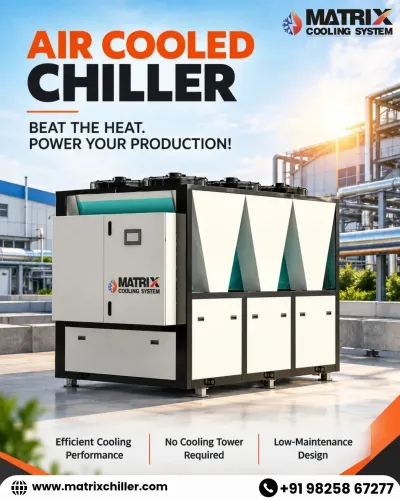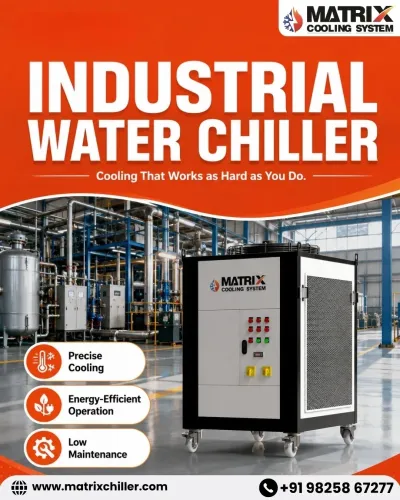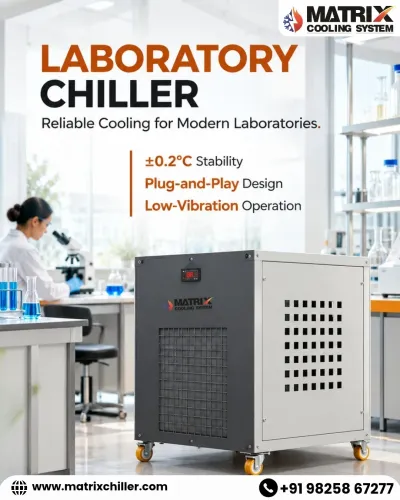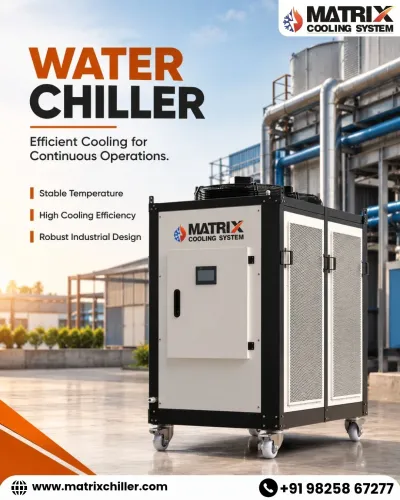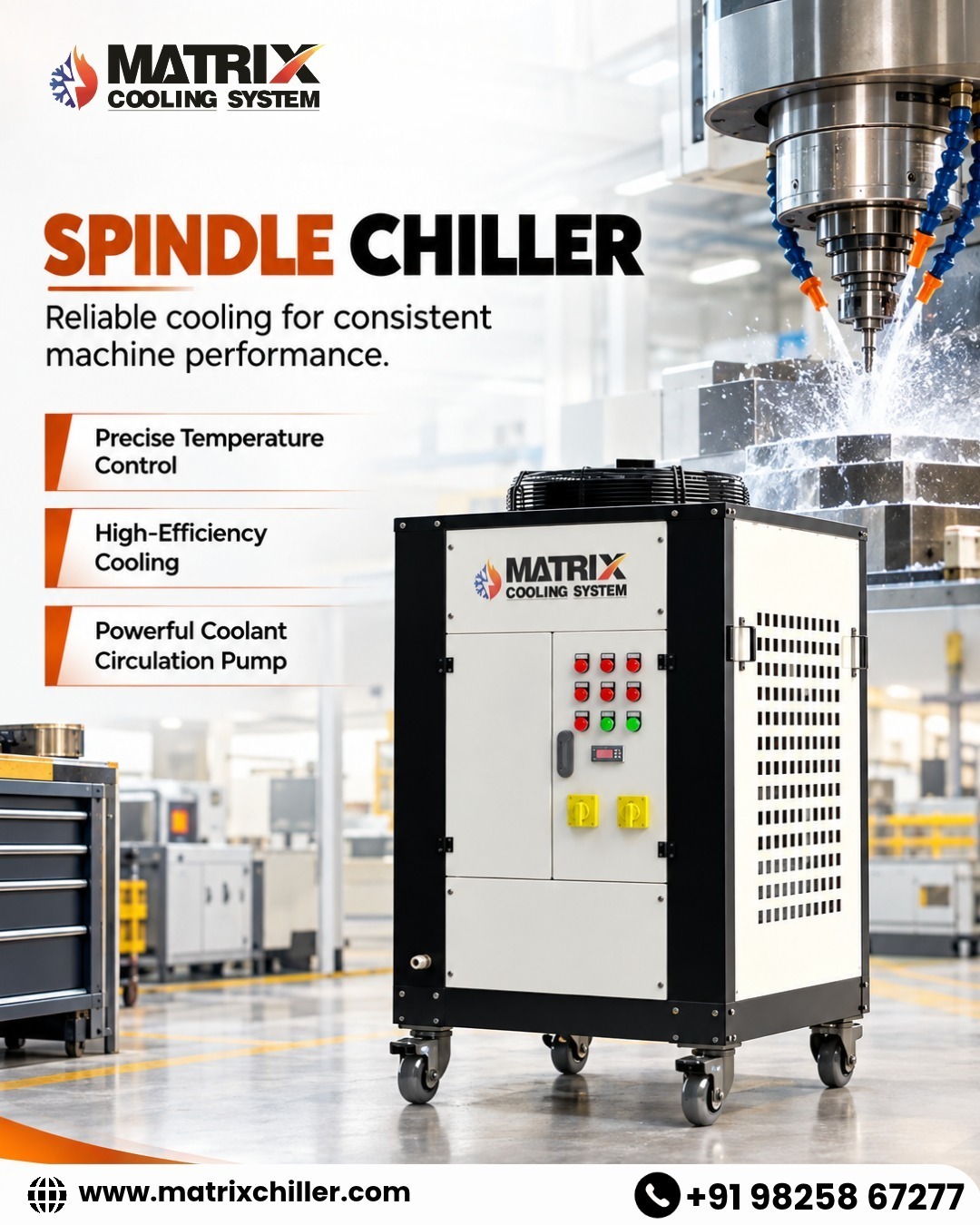
CNC machines require precise temperature control to maintain machining accuracy and consistent production quality. A Spindle Chiller removes excess heat from high spindle speeds and continuous operation, reducing thermal expansion and protecting machine components.
Matrix Cooling System, a trusted choice for businesses looking for Spindle Chiller Manufacturers in Ahmedabad, provides industrial cooling solutions that regulate spindle temperature through efficient coolant circulation. Our CNC Spindle Chiller solutions support reliable machine performance, improved machining precision, and efficient manufacturing operations.
Why Is a Spindle Chiller Important for CNC Machines?
1. Precise Temperature Control
Temperature fluctuations can cause thermal expansion in spindle components, affecting machining accuracy and finished product dimensions. An efficient Spindle Chiller for CNC Machines helps maintain stable temperatures by continuously removing excess heat from the cooling circuit.
Consistent temperature management is particularly important for high-speed machining and precision component manufacturing. By controlling heat buildup, a suitable spindle cooling system helps reduce thermal variations and supports repeatable production results.
2. Improved Machine Performance
CNC machines often operate for extended periods under demanding production conditions. Without adequate cooling, excessive spindle heat can reduce stability and impact machining performance. An industrial Spindle Chiller helps manage heat generated during continuous operation, supporting smoother machine performance and dependable production processes.
Manufacturers looking for a reliable Spindle Chiller Supplier in Gujarat should select equipment that matches the spindle's heat load, operating speed, and duty cycle. Proper cooling helps maintain required operating conditions and supports efficient manufacturing.
3. Better Spindle and Tool Protection
High operating temperatures can increase thermal stress on spindle bearings and other machine components. Over time, poor temperature management can lead to premature wear and increased maintenance needs.
A properly sized CNC Spindle Cooling System helps remove excess heat and maintain suitable operating temperatures. With proper lubrication, routine inspection, and preventive maintenance, effective cooling can protect spindle components and extend equipment service life.
4. Efficient Coolant Circulation
Coolant circulation plays a key role in managing spindle temperature. A spindle chiller typically uses a pump to circulate coolant through the designated cooling circuit, transferring heat from the spindle to the cooling system.
An industrial Spindle Chiller with a Coolant Circulation System helps maintain consistent coolant flow and temperature according to the equipment's design specifications. Proper flow rate, coolant quality, and regular maintenance are important for effective heat transfer and reliable operation.
5. Consistent Production Quality
Precision manufacturing requires accurate dimensions and repeatable machining results. Spindle temperature changes can affect tool positioning, component dimensions, and machining consistency.
A reliable Industrial Spindle Chiller helps minimize temperature variations and supports stable machining conditions. This is especially useful for manufacturers producing precision components where dimensional accuracy, surface finish, and consistent quality are important.
6. Support for Continuous Manufacturing Operations
Overheating-related production interruptions can disrupt workflow, reduce productivity, and strain maintenance schedules. Choosing the right CNC Machine Chiller helps businesses manage spindle heat during demanding production cycles.
When manufacturing units compare Spindle Chiller Manufacturers, they should evaluate the cooling unit's suitability for the intended machine, operating environment, and production schedule. The right configuration supports reliable cooling and helps maintain consistent manufacturing operations.
How Does a Spindle Chiller Work?
A spindle chiller removes heat from the spindle's designated cooling circuit and transfers it away through a refrigeration-based cooling process.
The working process generally involves the following steps:
1. Coolant Circulation: A pump circulates coolant through the spindle's cooling circuit.
2. Heat Absorption: The circulating coolant absorbs heat generated during spindle operation.
3. Heat Removal: The chiller's heat exchanger and refrigeration system remove heat from the returning coolant.
4. Temperature Regulation: A temperature controller monitors the coolant temperature and helps maintain the selected setpoint.
5. Continuous Cooling: The cooled liquid circulates back through the cooling circuit to help maintain stable operating conditions.
The exact working method depends on the chiller design and the spindle manufacturer's cooling requirements. Businesses looking for Spindle Chiller Manufacturers in Ahmedabad should confirm the required coolant type, flow rate, pressure, and temperature range before selecting a unit.
How to Choose the Right CNC Spindle Chiller
Selecting the right spindle chiller is key to effective cooling, reliable operation, and consistent machining quality. Before buying an industrial cooling system, consider these factors.
1. Cooling Capacity
Cooling capacity determines how much heat the chiller can remove under specified operating conditions. Choose a CNC Spindle Chiller based on the spindle's heat load, machine specifications, operating speed, and expected production requirements.
An undersized unit may struggle to maintain the required temperature, while an unnecessarily oversized system may increase initial and operating costs.
2. Temperature Control Accuracy
Different CNC machines require different coolant temperature ranges. Check the spindle manufacturer's recommended operating temperature and the application's required temperature stability.
A suitable Industrial Spindle Chiller should provide temperature control appropriate to the machine's operating conditions and machining requirements.
3. Coolant Flow Rate and Pressure
The cooling system must provide the flow rate and pressure required by the spindle. Insufficient circulation can reduce heat transfer, while unsuitable pressure may create compatibility issues.
When consulting a Spindle Chiller Supplier in Gujarat, provide the spindle's coolant specifications to help identify an appropriate cooling configuration.
4. Machine and Coolant Compatibility
Before selecting a spindle chiller, confirm that the cooling unit is compatible with the CNC machine and spindle assembly. Check the approved coolant type, connection sizes, flow requirements, and operating temperature range.
Reliable Spindle Chiller Manufacturers should help buyers evaluate these specifications to support proper integration with existing equipment.
5. Energy Efficiency
Energy consumption matters for manufacturing facilities that run cooling equipment for extended periods. Evaluate the chiller's efficiency under the expected operating conditions, along with its refrigeration capacity and control features.
Selecting an appropriately sized CNC Machine Spindle Chiller can help avoid unnecessary energy use while meeting the required cooling demand.
6. Maintenance and Service Requirements
Regular maintenance helps maintain cooling performance and reduce the likelihood of unexpected equipment problems. Consider access to filters, coolant tanks, pumps, heat exchangers, and other serviceable components.
When comparing a Spindle Chiller Distributor in India with other suppliers, review product documentation, technical support, service availability, and maintenance recommendations before you buy.
Applications of Spindle Chillers
A Spindle Chiller for CNC Machines is used in manufacturing applications where spindle heat must be controlled to support stable and accurate machining.
Common applications include:
· CNC Machining Centers: Helps maintain spindle temperature during precision machining operations.
· CNC Milling Machines: Supports temperature management during milling and material removal.
· High-Speed Spindles: Helps remove heat generated during high-speed spindle operation.
· Precision Grinding Machines: Supports stable operating conditions for precision grinding applications.
· Metalworking Industries: Helps manage spindle heat in metal component manufacturing.
· Automotive Component Manufacturing: Supports machining processes used to produce precision automotive parts.
· Industrial Automation: Provides cooling for compatible spindle-driven machinery used in automated production.
· Precision Component Production: Helps maintain thermal stability in applications that require repeatable dimensional accuracy.
The required cooling capacity and configuration depend on the machine type, spindle specifications, heat load, and operating environment.
Common Signs That a CNC Machine May Need Better Spindle Cooling
Recognizing cooling problems early can help businesses investigate potential issues before they disrupt production. The following signs may indicate that a spindle cooling system requires inspection:
· Coolant temperature remains above the recommended operating range.
· The chiller frequently triggers temperature or flow alarms.
· Coolant circulation appears restricted or inconsistent.
· The spindle operates at higher-than-expected temperatures.
· The cooling unit struggles to maintain its set temperature during production.
· Filters, coolant lines, or heat exchangers show signs of blockage or contamination.
These symptoms can have multiple causes and do not necessarily indicate chiller failure. Inspect the cooling circuit, coolant condition, airflow, and machine specifications according to the manufacturer's guidance.
For businesses working with Spindle Chiller Manufacturers in Ahmedabad, proper equipment selection and scheduled maintenance are key to maintaining effective cooling performance.
Why Choose Matrix Cooling System for Spindle Chiller Solutions?
Matrix Cooling System provides industrial cooling solutions for businesses that require effective temperature management for machinery and manufacturing processes. Selecting a suitable spindle chiller involves understanding the equipment's heat load, operating conditions, temperature requirements, and production environment.
When evaluating Spindle Chiller Manufacturers, buyers should consider:
· Cooling capacity suitable for the intended application.
· Temperature control requirements and operating range.
· Compatibility with the spindle and machine cooling circuit.
· Coolant circulation and heat removal requirements.
· Maintenance accessibility and operating costs.
· Technical guidance for selecting a suitable cooling configuration.
If you are searching for Spindle Chiller Manufacturers in Ahmedabad, a Spindle Chiller Supplier in Gujarat, or a Spindle Chiller Distributor in India, Matrix Cooling System can help you discuss your industrial cooling requirements and identify a suitable solution.
Looking for an efficient spindle cooling solution for your CNC machine? Contact Matrix Cooling System to discuss your requirements and explore a suitable industrial spindle chiller.
Frequently Asked Questions (FAQs)
1. What is the main purpose of a spindle chiller?
The main purpose of a Spindle Chiller is to remove excess heat from a machine spindle's cooling circuit and maintain a suitable operating temperature. This helps manage thermal expansion, support machining accuracy, and maintain reliable machine performance.
2. Why is a spindle chiller important for CNC machines?
A CNC Spindle Chiller helps control temperature fluctuations during machining operations. When selected and maintained properly, it supports dimensional accuracy, reduces thermal stress on spindle components, and helps maintain consistent production quality.
3. How does an industrial spindle chiller work?
An Industrial Spindle Chiller circulates coolant through a designated cooling circuit to absorb heat from the spindle. The refrigeration system removes that heat, and the cooled liquid returns to the circuit to help maintain the required temperature.
Keywords