How Can an Industrial Water Chiller Improve Cooling Efficiency in Manufacturing?
Maintaining accurate temperature control is essential for product quality, machinery performance, and smooth manufacturing operations. Industrial processes often generate excess heat, which can reduce equipment efficiency, affect production quality, and disrupt operating conditions. An industrial water chiller removes excess heat and maintains the required temperature for different industrial applications.
From plastic processing and pharmaceuticals to food production and chemical manufacturing, industrial chillers provide reliable process cooling. Matrix Cooling System offers industrial cooling solutions for businesses that need consistent temperatures and improved production efficiency.
What Is an Industrial Water Chiller?
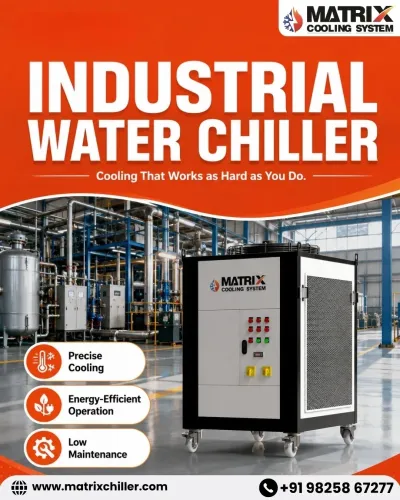
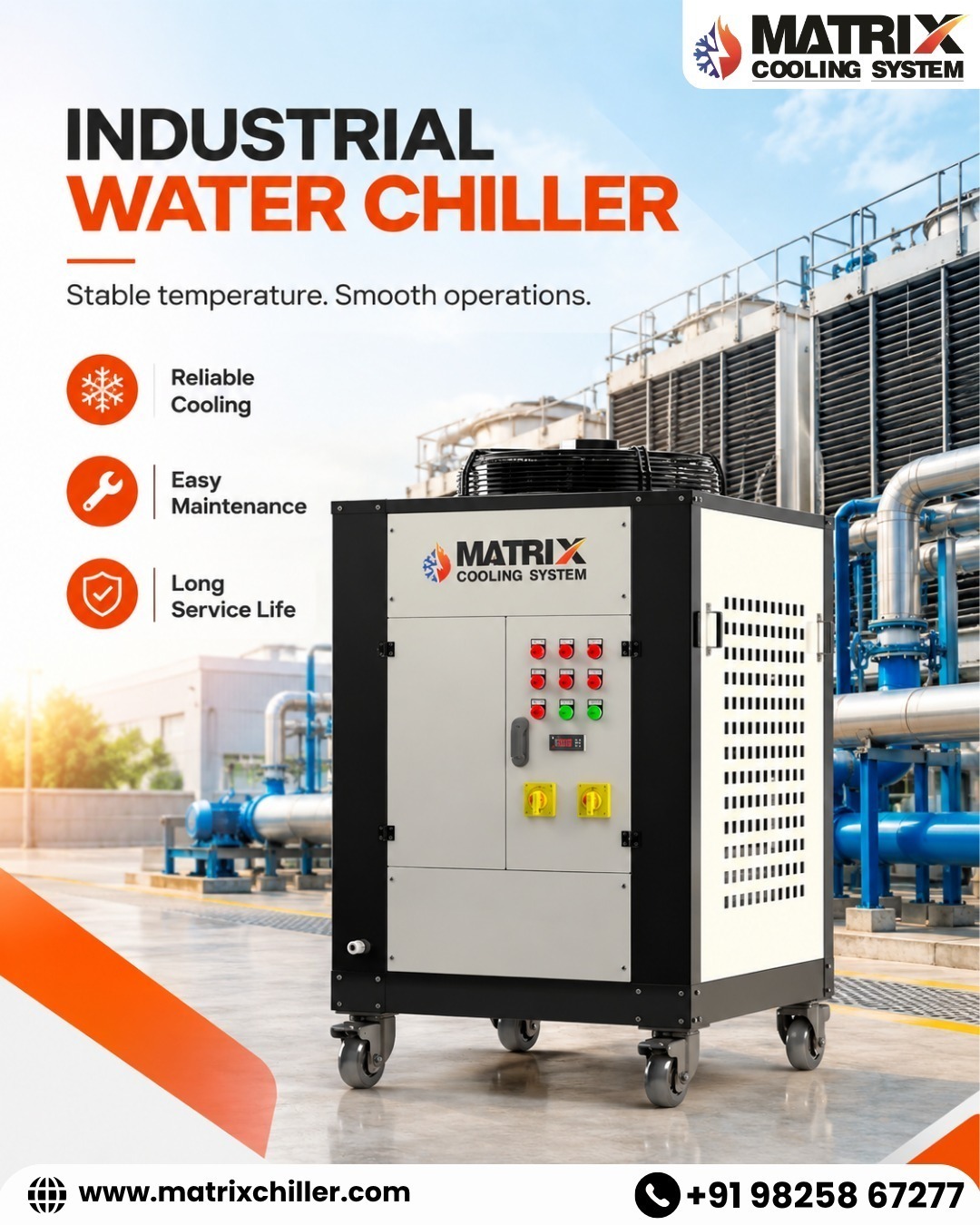
An Industrial Water Chiller is a cooling system designed to remove heat from water or another suitable circulating fluid and supply chilled fluid to industrial machinery and processes.
Chilled water circulates through connected equipment, molds, heat exchangers, or production systems, absorbing unwanted heat. The warmed water then returns to the chiller, where it cools and circulates again.
Depending on the application and cooling requirements, industrial water chillers are available in different configurations:
· Air-Cooled Water Chillers
· Water-Cooled Water Chillers
· Industrial Process Chillers
· Portable Water Chillers
· Centralized Industrial Cooling Systems
Businesses looking for an Industrial Water Chiller Manufacturer in Ahmedabad should consider the cooling capacity, operating temperature, installation space, and specific process requirements before selecting a system.
How Does an Industrial Water Chiller Improve Cooling Efficiency?
A properly selected Industrial Water Chiller Machine offers several advantages for manufacturing facilities.
1. Precise Temperature Control
Industrial water chillers help maintain controlled water temperatures according to process requirements. Stable cooling conditions support consistent production and help prevent unwanted temperature fluctuations.
2. Improved Equipment Performance
Excessive heat can affect machinery operation and increase the risk of equipment-related problems. An industrial cooling system removes unwanted heat and helps maintain suitable operating conditions.
3. Consistent Product Quality
Many manufacturing processes require specific temperature conditions. Reliable cooling reduces temperature-related variations and supports consistent product quality.
4. Optimized Energy Consumption
Modern chillers can incorporate efficient compressors, heat exchangers, pumps, and intelligent controls. The right system configuration can help optimize cooling performance and energy consumption.
5. Reduced Production Interruptions
Maintaining the required cooling conditions helps protect temperature-sensitive machinery and supports stable manufacturing operations.
Key Components of an Industrial Water Chiller System
An Industrial Chiller System contains several components that work together to provide effective cooling:
· Compressor: Compresses and circulates refrigerant through the refrigeration cycle.
· Condenser: Releases heat from the refrigerant into the surrounding air or cooling water.
· Evaporator: Transfers heat from the circulating process water to the refrigerant.
· Expansion Valve: Regulates refrigerant flow into the evaporator.
· Water Pump: Circulates chilled water through connected equipment.
· Control Panel: Monitors and regulates temperature and system operation.
The selection and performance of these components affect the system's overall cooling efficiency and reliability.
Major Applications of Industrial Water Chillers
An Industrial Water Chiller for Manufacturing is used across industries where controlled cooling is important.
Plastic Manufacturing
Used for cooling injection molding machines, extrusion lines, and molds to support stable production cycles.
Pharmaceutical Industry
Supports temperature-controlled manufacturing processes and equipment cooling requirements.
Food and Beverage Industry
Used for process cooling in food production, beverage processing, and other temperature-sensitive applications.
Chemical Industry
Helps manage heat generated during chemical processing and supports cooling requirements for reactors and production equipment.
Printing Industry
Maintains suitable operating temperatures for printing machinery and related equipment.
Engineering and Manufacturing
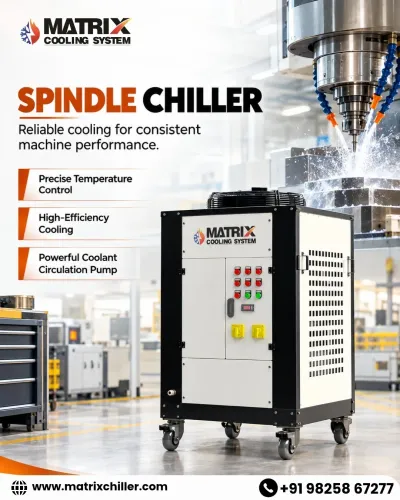
Used to cool CNC machines, laser equipment, hydraulic systems, and other industrial machinery, depending on specifications.
HVAC Applications
Used in centralized cooling systems for large commercial and industrial buildings.
Air-Cooled vs. Water-Cooled Industrial Water Chiller
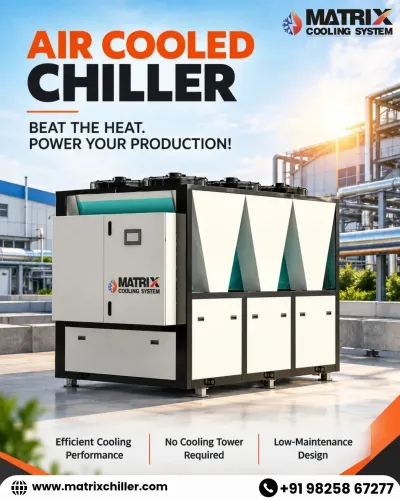
Choosing between air-cooled and water-cooled systems depends on cooling capacity, installation conditions, water availability, and operating requirements.
Column 1 Column 2 Column 3
Feature Air-Cooled Chiller Water-Cooled Chiller
Heat rejection Uses ambient air Uses cooling water
Installation Generally simpler Requires additional cooling infrastructure
Cooling tower Usually not required Typically required
Maintenance Requires regular condenser and airflow checks Requires water-system and cooling tower maintenance
Applications Suitable for various small and medium installations Commonly considered for larger cooling installations
Both configurations can provide effective industrial cooling when selected for the right application.
How to Choose the Right Industrial Water Chiller?
Before purchasing an industrial cooling system, consider these important factors:
1. Cooling Capacity: Calculate the heat load generated by machinery and production processes.
2. Operating Temperature: Identify the required chilled water temperature.
3. Chiller Type: Select an air-cooled or water-cooled configuration based on site conditions.
4. Energy Efficiency: Evaluate compressor performance and overall power consumption.
5. Water Flow Rate: Ensure the system meets the required circulation rate.
6. Installation Environment: Consider ambient temperature, available space, ventilation, and utilities.
7. Maintenance Support: Check spare parts availability and technical assistance.
If you are comparing industrial water chiller suppliers in Gujarat, evaluate product specifications, application suitability, service support, and long-term operating requirements.
Why Choose Matrix Cooling System?
Choosing the right cooling equipment is essential to maintaining reliable industrial operations. Matrix Cooling System focuses on industrial cooling needs and helps businesses identify suitable water chiller solutions for their applications.
Whether you need a process cooling system or a larger industrial cooling installation, discuss your requirements with the team to identify an appropriate configuration.
Businesses looking for an Industrial Water Chiller Distributor in India should compare technical specifications, cooling requirements, installation needs, and after-sales support before deciding to buy.
Frequently Asked Questions (FAQs)
Q1. What is an Industrial Water Chiller used for?
An industrial water chiller removes excess heat from industrial processes and machinery. It is commonly used in plastic manufacturing, pharmaceuticals, food processing, chemicals, printing, and engineering.
Q2. How does an Industrial Water Chiller work?
It uses a refrigeration cycle to remove heat from circulating water. The chilled water absorbs heat from connected equipment and returns to the chiller to be cooled again.
Q3. What are the different types of Industrial Water Chillers?
Common configurations include air-cooled chillers, water-cooled chillers, process chillers, portable chillers, and centralized cooling systems.
Keywords