Inverter Chiller Manufacturer in Ahmedabad | Matrix Cooling System
In modern manufacturing industries, maintaining consistent cooling while managing electricity consumption is essential for efficient production. An Inverter Chiller is an advanced industrial cooling solution that adjusts cooling output to match actual operational needs. It helps maintain stable temperatures and can improve energy efficiency under varying cooling loads.
Unlike conventional chillers that generally operate compressors at fixed speeds, an inverter-based system adjusts compressor speed based on cooling demand. This lets the equipment deliver the required cooling without running continuously at full capacity.
Matrix Cooling System offers industrial cooling solutions for businesses looking for efficient temperature management. If you are searching for an Inverter Chiller Manufacturer in Ahmedabad or an Inverter Chiller Supplier in Gujarat, understanding the technology, applications, and selection factors can help you decide with confidence.
What Is an Inverter Chiller?
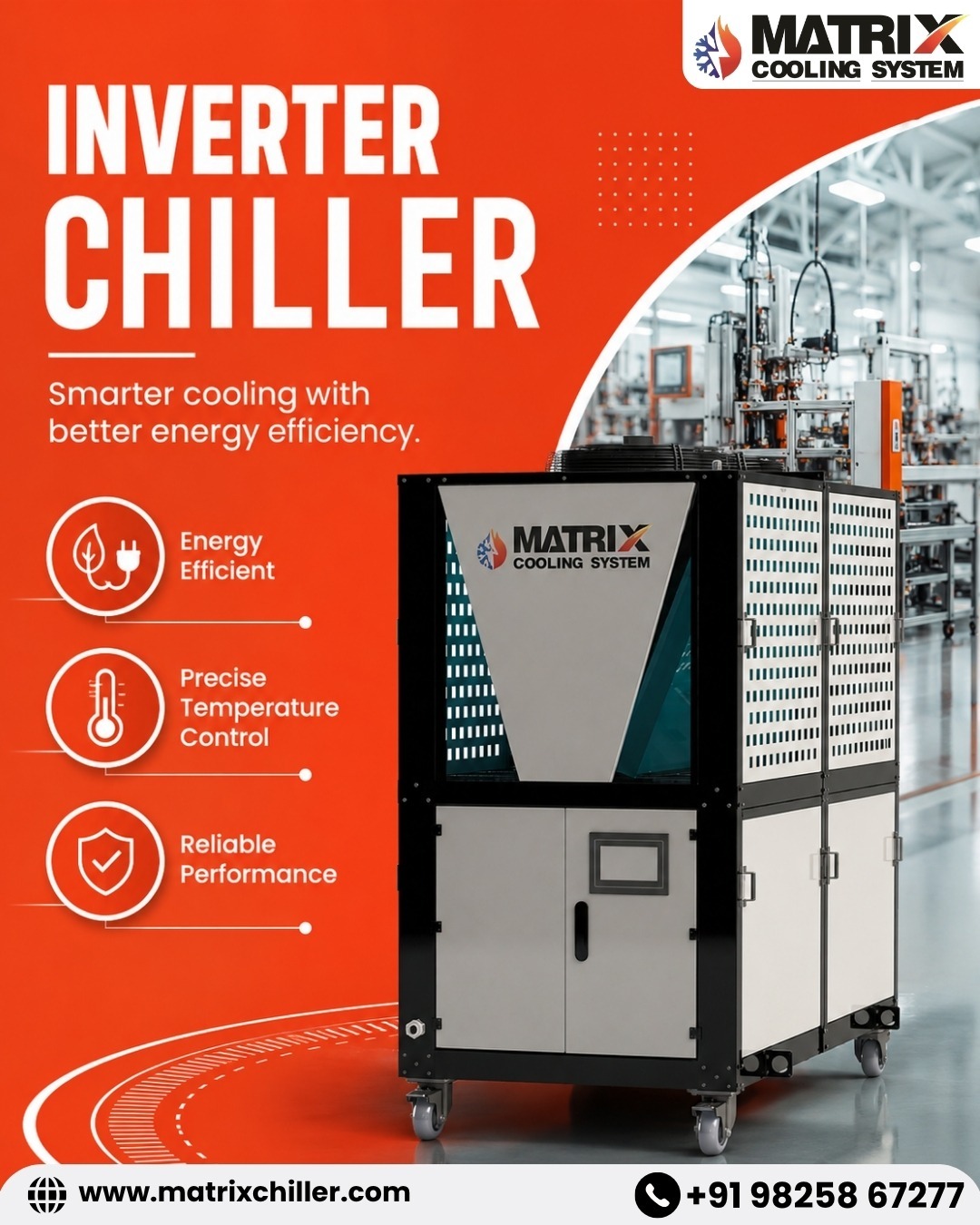
An Inverter Chiller is an industrial cooling system that uses inverter-driven compressor technology to regulate cooling capacity. It automatically adjusts compressor speed according to the required cooling load.
· When cooling demand increases, the compressor speeds up.
· When cooling demand decreases, the compressor slows down.
· The system adjusts its output to help maintain the required temperature.
This variable-speed operation makes an Industrial Inverter Chiller suitable for manufacturing processes that experience changing cooling requirements.
How Can an Inverter Chiller Improve Energy Efficiency?
An inverter chiller offers several operational advantages that can help industries manage their cooling requirements more efficiently.
1. Helps Reduce Energy Consumption
An inverter compressor adjusts its speed to match cooling demand instead of running continuously at full capacity. This can reduce unnecessary electricity consumption, particularly when the cooling load is lower.
2. Provides More Precise Temperature Control
Consistent temperature management is important for product quality and manufacturing processes. Variable-speed compressor operation allows cooling output to respond to changing requirements, helping minimize temperature fluctuations.
3. Optimizes Cooling Performance
An inverter-driven compressor automatically adjusts its output based on the actual cooling load. This helps the system respond to changing operating conditions and deliver suitable cooling performance.
4. Reduces Frequent Compressor Start-Stop Cycles
Conventional fixed-speed chillers often regulate cooling through compressor on-off cycles. Inverter technology can reduce the need for frequent start-stop operation by adjusting compressor speed.
5. Supports Reliable Industrial Operations
Consistent cooling is essential to protect machinery and maintain production conditions. When selected, installed, and maintained correctly, an inverter chiller can support dependable industrial cooling operations.
6. Helps Manage Long-Term Operating Costs
Improved energy management can contribute to lower electricity expenses over time. For industries with continuous or fluctuating cooling requirements, an energy-efficient chiller can support better operational cost management.
What Are the Major Applications of Industrial Inverter Chillers?
Industrial inverter chillers suit various industries where machinery, materials, or production processes require controlled cooling.
Common applications include:
· Plastic Injection Molding: Helps manage process temperatures during plastic manufacturing.
· Plastic Extrusion: Supports temperature control for extrusion equipment and production processes.
· Pharmaceutical Manufacturing: Provides controlled cooling for selected manufacturing applications.
· Food and Beverage Processing: Supports cooling requirements in food production and processing equipment.
· Chemical Processing: Helps maintain required operating temperatures in suitable processes.
· CNC Machining: Supports cooling requirements for machining equipment and related systems.
· Printing and Packaging: Provides cooling for machinery used in printing and packaging operations.
· Laboratories and Research Facilities: Supports temperature management for selected equipment.
· Medical Equipment: Used for cooling compatible equipment.
· Industrial Machinery: Helps manage heat generated by machinery during operation.
What Are the Key Features of an Inverter Chiller?
Depending on the model and configuration, an inverter chiller may include the following features:
· Variable-speed inverter compressor
· Energy-efficient cooling operation
· Precise temperature management
· Automatic cooling load adjustment
· Reduced compressor cycling
· Intelligent temperature control system
· Continuous industrial cooling capability
· Compact and space-efficient design
· User-friendly operating interface
· Flexible cooling performance under varying loads
These features make inverter chillers a practical option for industries looking to improve cooling management and production efficiency.
How to Choose the Right Industrial Inverter Chiller?
Selecting the right Inverter Chiller Machine is important for maintaining production quality, protecting equipment, and managing operating expenses.
Before purchasing an industrial cooling system, consider these important factors:
1. Required Cooling Capacity
Calculate the cooling load according to your machinery, production process, and operating requirements. Selecting the correct capacity helps avoid insufficient or unnecessary cooling.
2. Operating Temperature Range
Check your application's temperature requirements and ensure the selected chiller can maintain the required operating conditions.
3. Cooling Load Variations
Understand whether your production process has constant or changing cooling requirements. This helps determine whether variable-speed compressor technology is suitable.
4. Compressor Technology
Review the compressor type, inverter control system, and operating efficiency of the proposed equipment.
5. Refrigerant Type
Check the refrigerant used in the chiller and confirm it suits the equipment design and application requirements.
6. Water Flow Requirements
Consider the required water flow rate, inlet and outlet temperatures, and compatibility with your industrial cooling system.
7. Installation and Maintenance
Evaluate available installation space, ventilation, maintenance access, and after-sales support before purchasing.
Choosing the right industrial chiller for your production requirements can improve cooling performance and support efficient operations.
Why Choose Matrix Cooling System for Industrial Cooling Solutions?
Choosing a suitable cooling equipment supplier is important for businesses that depend on reliable temperature management.
Matrix Cooling System focuses on industrial cooling requirements and helps businesses explore suitable cooling solutions for their applications.
When evaluating an Inverter Chiller Manufacturer in Ahmedabad or an Inverter Chiller Supplier in Gujarat, consider product suitability, technical specifications, cooling capacity, installation requirements, and service support.
Contact Matrix Cooling System to discuss your industrial cooling requirements and find a suitable chiller solution for your application.
Frequently Asked Questions (FAQs)
Q1. What is an Inverter Chiller used for?
An Inverter Chiller provides controlled cooling for industrial machinery, manufacturing processes, and equipment that require consistent temperature management.
Q2. How does an inverter chiller save energy?
It adjusts compressor speed to match actual cooling demand instead of running continuously at full capacity. This can reduce unnecessary electricity consumption, particularly under varying cooling loads.
Q3. What is the difference between an inverter chiller and a conventional chiller?
An inverter chiller uses variable-speed compressor technology to adjust cooling output, whereas a conventional chiller generally uses fixed-speed compressor operation with on-off cycling.
Keywords